We have invested countless hours dissecting the framework of modern slot games, and we consistently revert to a single, irrefutable truth: the most exceptional mathematical models and breathtaking visual effects mean nothing if the player cannot navigate around the interface https://kingkongsplash.co.uk/. In our evaluation of King Kong Splash Slot, the navigational design does not merely function as a background utility; it emerges as the primary reason for sustained engagement. We witnessed a fluidity that eradicates the cognitive friction typically associated with complex betting configurations. The developers have clearly focused on a layout where every control appears exactly where our instincts predict it to be, creating an immediate sense of mastery from the very first spin.
Spatial Design and Spatial Balance
When we initially opened the game, the spatial distribution of elements struck us as exceptionally balanced. The reels occupy the central position with an dominant feel, yet they do not overpower the adjacent elements into invisibility. We observed a clever use of empty space that frames the gameplay without rendering the screen appear empty. The command console is positioned to the bottom edge with a weighted, tactile feel that mimics real casino buttons. This layout coordination guarantees that our thumbs, on phones, never overstretch, and our mouse cursors, on PC, move minimal distances. The transparency settings of the overlay menus are adjusted optimally, letting us to modify options while keeping a blurred visual connection to the reels turning behind the menu panel.
The Centralized Command Hub
We discover that many rival slots scatter their interactive elements over opposite corners of the screen, forcing a frenzied visual search. Here, the command hub operates on a tenet of centralized aggregation. The spin button, by far the most frequently used element, is not just more substantial but is positioned in a zone of instinctive thumb rest. Encircling it, we encounter the autoplay and bet setup options emanating outward in a logical order of occurrence. This grouping diminishes precise motor tension during extended sessions. We especially value that the developers refrained the tendency to obscure additional features like the turbo mode behind layered menus; these are reachable within the hub’s immediate orbit, accepting that speed control is a fundamental navigational necessity, not an secondary thought.
Sight Emphasis and Button Indicators
In our examination of the layout, we found that the on-screen signifiers conform rigorously to recognized global gaming standards. Buttons seem pressable; sliders appear draggable. There is a pleasing skeuomorphic quality to the components, with delicate gradients that attract the illumination, inviting engagement. We rarely had to question whether an item was cosmetic or practical. The separation is attained through difference levels and a uniform shading language that lifts clickable areas above fixed surfaces. When a selection is performed, the tactile response is prompt, with a brief brightness burst that validates the entry without jolting us out of the playing rhythm. This distinct transmission of functionality is a model in minimizing the acquisition path to complete zero.
Autoplay and Advanced Session Management
For those of us who opt for a more objective observation style, the advanced session management tools are a navigation triumph. The autoplay configuration panel is a template of intuitive grouping. We observed loss limits, single win limits, and spin counts organized into distinct visual cards, avoiding the mixing of merging financial controls with mechanical ones. Toggling these limits seems robust, with clear on/off states that leave no doubt. We especially valued the real-time session tracker that subtly ticks down remaining spins or displays current loss thresholds without intruding on the main reel area. This lets us to keep a disciplined approach to bankroll management while the base game navigation continues to work with the same smooth responsiveness.
The Pay Table and Info Accessibility
Transparency is a foundation of trust, and we found the information architecture here to be remarkably clear. Accessing the paytable does not trigger a different, slow-loading PDF or a complex multi-page tool. Instead, a smooth overlay moves into sight, presenting symbol values and payline maps with sharp, high-definition sharpness. We could easily navigate through rule pages, and the slot remembered our place if we shut the panel mid-way. The language used is brief, steering clear of legalese where straightforward descriptions work. Critically, real-time figures within the paytable change in real-time to show our present bet multiplier. This live updating eliminates the head calculations that often affects slot play, allowing us to instantly comprehend the precise money worth of any possible combination we are chasing.
Sound and visual Feedback as a Directional Guide
We rarely discuss sound in the context of navigation, but here it serves as a vital orienting tool. The interface employs a distinct, layered audio signature for different action classes. A soft, ascending chime signals a bet boost, while a more profound, more sonorous click fixes the spin. These aural cues provide assurance without forcing us to look away from the reels. When we enter a bonus feature, the complete soundscape changes, signaling a modal change in the game state navigationally before we even handle the visual shift. This cross-sensory reinforcement is crucial for players who trust rhythm. The visual feedback is likewise exact; winning lines are lit up with directional pulses that trace the payline path, instructing us the layout of the game purely through celebratory animation.
Wager Configuration and Wager Settings Logic
We have come across many slots where adjusting a wager appears like handling a tricky device, with puzzling coin values and level multipliers. The setup logic here is a welcome change. We valued the one-axis slider that transitions effortlessly from minimum to maximum stake, alongside a visible numerical readout of the full stake. There are no hidden sections for coin sizes that accidentally reset our choices. The platform provides a distinct visual separator between small, mid, and high-value zones on the bet spectrum. We also noted the smart safety warnings; if we seek to rotate with a significantly higher stake, a gentle, non-disruptive confirmation highlight emerges, functioning as a guardian against accidental high-value wagers without breaking the flow of the play.
Loading Speed of the Game and Persistence of State
Moving through the game starts long before the spinning reels show up; it initiates with the load screen. We assessed the initial boot sequence and discovered it adjusted to near-instant readiness on a reliable connection. The lack of intrusive, non-skippable splash screens means we transition from purpose to activity in seconds. More significantly, the slot game exhibits outstanding state persistence. If network wavers, the game interface rebounds seamlessly, returning our exact wager setup and session state without reverting to default settings. We not once were required to re-navigate the bet settings after a momentary interruption. This dependability is a silent, strong aspect of user-friendly design; it acknowledges our earlier inputs and removes the repetitive hassle of reconfiguration, maintaining the route back to the play as quick as achievable.
The idea of Smooth User Experience
We believe that exceptional game design is invisible. When we analyze a slot, we deliberately look for moments of pause, those micro-pauses where the brain fumbles to identify the reel button or the payout table. In this title, those moments are entirely missing. The design philosophy appears to focus around a circular eye-tracking pattern, leading our gaze instinctively from the reels to the stake adjuster and back without needing secondary hunting. This is not an fluke; it is a purposeful avoidance of cluttered gaming screens. By eliminating visual clutter and prioritizing tactile-like visual feedback, the studio has created an setting where the player’s concentration remains uninterrupted, enabling us to focus purely on the increasing tension of the massive ape’s special features.
Cell Adaptability and Touch Refinement
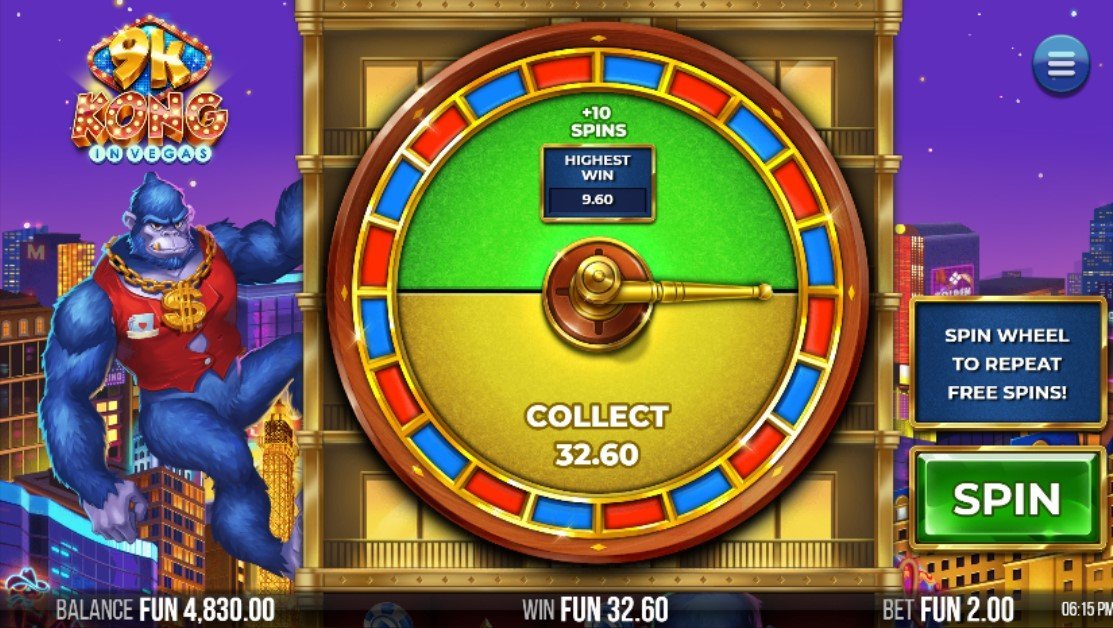
We meticulously tested the game across multiple display sizes, and the adaptive layout is genuinely outstanding. Rather than merely compressing the PC interface, the orientation moves to a vertically enhanced pile that honors the usability of one-handed play. We noticed that key contact zones never fall under the suggested 48-pixel boundary, preventing the annoyance of mis-taps during high-risk special stages. The flick movements appear native to the unit, not attached on. When we turned our panels, the rearrangement of elements was instantaneous, with none arrangement fracturing or text clipping. This commitment to flexible architecture verifies that the portable session was the principal template, not an afterthought, guaranteeing that navigation remains intuitive irrespective of the tool in our grip.
Distraction-Free Absorption and Overlay Visibility
We are particularly responsive to layouts that scream for attention with glaring promotions and sudden acquisition offers. The interface here champions moderation. Notifications for achievements or balance changes glide in from the periphery with a soft fade, providing data without hijacking the engagement zone. The maximized mode is authentically full-screen, hiding browser chrome and OS bars to build a isolated world. When we checked the gaming rules or records, the layer maintained a deep darkness base, efficiently dimming the reels to shift the information ahead in our sight hierarchy. This handling of sight layering assures that when we are browsing the settings, we are not diverted by the play, and when we are spinning, we are not harassed by the options.
In summarizing up our detailed exploration, we determine that the browsing framework of this game is its hidden killer element. Every gesture, tap, and press appears premeditated to benefit the user’s ease and speed. The layout does not just allow gaming; it actively enhances the atmospheric intensity by removing every conceivable obstacle between the player and the primal roar of the next huge jackpot. It stands as a reference for how thoughtful arrangement and responsive reaction can convert a standard slot machine session into a smooth exemplar of gaming journey.